
Betrayal at House on the Hill
A board game where players explore a haunted house until one betrays the rest.

Wikipedia / Wikimedia Commons
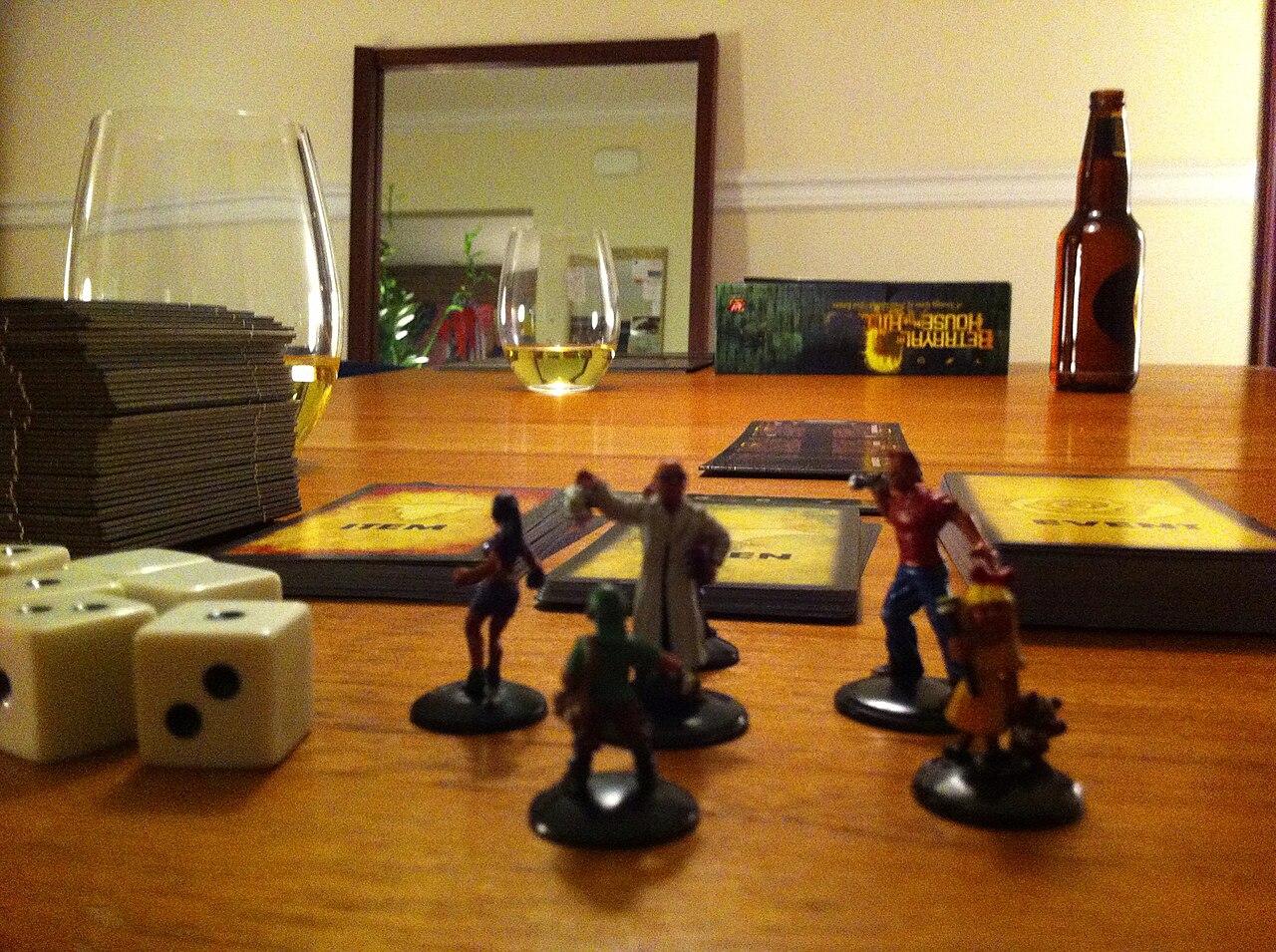
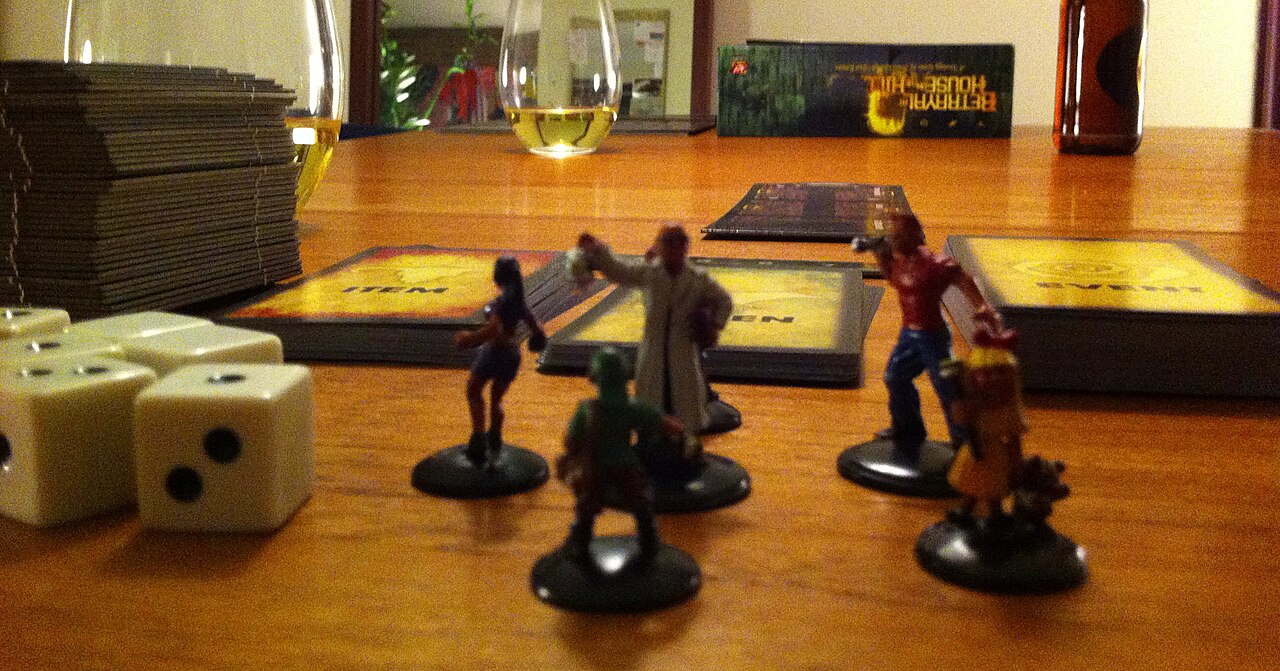
Betrayal at House on the Hill is a board game originally published by Wizards of the Coast in 2004 (under the Avalon Hill brand), designed by Bruce Glassco and developed by Rob Daviau, Bill McQuillan, Mike Selinker, and Teeuwynn Woodruff. The game is notable for its two-phase structure: an exploration phase where players randomly build a haunted house, followed by a haunt phase where one player typically becomes a traitor opposing the others. Its randomized scenarios and reliance on horror tropes have made it a distinctive entry in modern board gaming.
- published
- 2004
- publisher
- Wizards of the Coast (under the Avalon Hill brand)
- designer
- Bruce Glassco
- developers
- Rob Daviau, Bill McQuillan, Mike Selinker, Teeuwynn Woodruff
- genre
- Board game
- number_of_haunts
- 50
Lore & Background
Betrayal at House on the Hill begins with all players as allies exploring a randomly generated haunted house. Room tiles are drawn and placed as players move, creating a unique layout each session. The game has two phases: the Exploration phase, where players gather items, events, and omens, and the Haunt phase, triggered by drawing an Omen card and rolling dice. The specific Omen and, in earlier editions, the room determine which of 50 possible haunts occurs and who becomes the traitor. The traitor then reads secret goals from one book, while the remaining heroes read their victory conditions from another. Haunts draw from horror tropes such as zombies, vampires, dragons, and ghosts.
Reader's Guide
Betrayal at House on the Hill has had multiple editions and expansions. The first edition is out of print; a second edition was released on October 5, 2010. A Dungeons & Dragons themed version, Betrayal at Baldur's Gate, was announced June 3, 2017 and released October 6, 2017. Betrayal Legacy, a legacy version with a prologue and thirteen-chapter story, was announced November 17, 2017 and released November 9, 2018. A Scooby-Doo themed version, Betrayal at Mystery Mansion, was released July 24, 2020, featuring 25 haunts and allowing players to volunteer as traitor. A third edition was announced March 1, 2022, releasing in Europe April 1, 2022 and worldwide August 1, 2022, streamlining gameplay and adding 5 new scenarios. The first expansion, Widow's Walk, was announced April 20, 2016 and released October 14, 2016, adding 20 room tiles, a roof floor, 30 cards, and 50 new haunts. The game won a 2004 Gamers' Choice Award for Best Board Game. Reception has been mixed: David M. Ewalt praised its randomized scenarios, while Michael Harrison of Wired.com noted exploitable rules. Wirecutter found it too complex for beginners. Andrew Zimmerman Jones of Black Gate said it captures storytelling excitement of roleplaying with less planning.
Did You Know?
- The game features 50 possible haunts, each based on horror tropes such as zombies, vampires, dragons, and ghosts.
- The first expansion, Widow's Walk, added 30 new room tiles and an additional floor (the roof) for gameplay.
- Betrayal at Mystery Mansion, a Scooby-Doo themed version, determines the traitor by a specific card draw, not by volunteering.
- The third edition of Betrayal at House on the Hill was released in Europe on April 1, 2022, before a worldwide release on August 5, 2022.
Origins & Core Design
Conceived by designer Bruce Glassco and brought to life through the development work of Rob Daviau, Bill McQuillan, Mike Selinker, and Teeuwynn Woodruff, Betrayal at House on the Hill hit shelves through Avalon Hill in 2004. The game's architecture rests on a deceptively simple premise: a group of players cooperatively explores a haunted mansion, building its layout tile by tile as they move from room to room. The house begins with three floors—the ground level and upper story linked by a staircase, while the basement sits isolated until specific in-game actions open a passage. Because every new room is drawn at random and placed only when a player steps through an unopened door, no two sessions produce the same floor plan. This procedural generation of the playing space, combined with the two-act structure of Exploration followed by Haunt, gives the game a narrative unpredictability that distinguishes it from more rigidly structured board games of its era.
The Betrayal Moment
The defining tension of the game crystallizes in an instant: the moment an Omen card triggers the Haunt. Depending on the edition's rules, a dice roll may confirm the trigger, and the specific Omen—along with the room where it was found in earlier editions—determines both which of the fifty possible haunts activates and which player becomes the traitor. That player then physically leaves the table. While the heroes consult a shared rulebook outlining their victory conditions, the traitor reads a separate book detailing their secret objectives and abilities. The haunts draw from a broad palette of horror archetypes—zombies, vampires, dragons, cannibals, ghosts—each with distinct goals for both sides. Crucially, neither faction is obligated to disclose new powers or win conditions, though every action taken must be announced aloud. When the traitor returns to the table, open conflict erupts: heroes can strike at the traitor and any creatures they command, and the traitor can retaliate in kind. This asymmetric, hidden-information combat is the emotional core of the experience.
Evolution & Expansions
Since its 2004 debut, the franchise has grown into a sprawling family of variants and updates. The original first edition is out of print, succeeded by a second edition in October 2010. In 2016, the Widow's Walk expansion added a rooftop floor, twenty new room tiles, thirty new cards, and fifty additional haunts, with creative contributions from writer Pendleton Ward and Max Temkin of Cards Against Humanity. A Dungeons & Dragons–themed spin-off, Betrayal at Baldur's Gate, arrived in late 2017. That same year, Avalon Hill announced Betrayal Legacy, a multi-session campaign with a prologue and thirteen chapters spanning several decades, released in November 2018. The Scooby-Doo–themed Betrayal at Mystery Mansion followed in July 2020, offering twenty-five episode-based haunts, a shorter playtime of twenty-five to fifty minutes, and the option for players to volunteer as the traitor rather than leaving it to chance. A third edition of the core game launched in 2022, streamlining mechanics, adding five new scenarios, and including six unpainted miniatures, with further expansions anticipated by Avalon Hill's product development team.
Reception & Critical Legacy
The game's critical reception has been broadly positive, though not without caveats. It earned a 2004 Gamers' Choice Award for Best Board Game, a notable early validation. Reviewer David M. Ewalt praised the 2010 edition for its replayability, noting that the randomized, secret scenarios create surprising storylines and that the experience is especially thrilling for the player cast as the murderous traitor. Michael Harrison of Wired.com enjoyed the second edition but flagged that certain rules could be exploited to game-breaking effect. Wirecutter's board game review cautioned that the title may feel too complex for newcomers. Perhaps the most resonant observation came from Andrew Zimmerman Jones in Black Gate, who argued that the game successfully captures the storytelling excitement of tabletop roleplaying within a single box, with the added benefit of requiring far less planning than a dedicated game master. Extensive errata documents, freely available to address unclear rules, have also been part of the game's ongoing support, reflecting Avalon Hill's commitment to keeping the experience accessible across editions.
Gallery
More in Horror board games 1-19
Spotted an error? Know more?
This is a living reference — every entry is fact-audited, and reader corrections feed straight into our audit queue. Suggest an edit · See this site's audit record